You can’t be a good writer if you aren’t a good reader. As an English teacher, I know how much the two go hand-in-hand. Let alone, it’s a lesson I learned as a creative writer myself.
I’m not gonna lie, though: I’m not as keen on reading.
I prefer to create things myself, rather than marvel at others’ creations. Selfish–I know, but at least I’m honest about it! There are some books that I really want to read. I have a personal library I make my husband haul around for me when we move, full of books I want to read–someday…not now. But, being the Pinterest-er I am, I found out about bullet journals. I have journaled all my life; typically about my day or feelings or dreams.
When I discovered bullet journalling for reading, I actually became more motivated to read just so I can fill it up!
I was so obsessed and it helped me so much that I made my students keep one throughout the year. While some of them really took to it, others hated it. I did find that students reported that their story horizons opened more because they discovered more than just print books.
I want to introduce you to my reading journal and the variety of things I include to keep the reader in me alive.

Now, I’m one of those people who, when I get artistically inspired, I get all fancy and really invest a lot of time into my work. Though time-consuming, it brings me lots of pride, relieves stress, and reminds me just how amazing I am. Humor me, yah?
One of the first things I do is my Daily Reading Tracker.
It’s a simple grid that I visit every day and track which days I read. Your reading journal is the perfect place to do so. As you can see, I go a lot of days not reading; then other times, I can’t stop. I find that keeping this really keeps me motivated to read–even if something small–because I want to fill in the gaps!

Another thing that I do is Reading Challenges.
If there is a group or genre of stories that I want to read, I’ll challenge myself to read them all. Essentially, it’s another kind of tracker, but I like to make it much more decorative. You can see here, I’m doing a classics challenge between European and American classics. Despite my English major, I actually haven’t read many classic stories. Don’t judge me.

Reading Timelines are one of my favorites to create.
I really enjoy reviewing what all I’ve read during a particular time frame. For some odd reading, I feel like “Yeah, I read that and that and that… y’know, because I’m hardcore”. Don’t ask me why…it’s just a thing.
Anyway, on these, I break my seasons or semesters down into their months and track what I read during that time. I mean short stories, novels, poems, everything. I draw a symbolic image of the story, the original publication year, the title and the author. That’s why it looks all fancy.

Reflections are a must when you read something.
I’ve mentioned many times before that reading is our ways to understand the world that we wouldn’t otherwise know. When we read, we live many lives and travel to many places. Reading gets us thinking about the world around us from other perspectives that we may not have considered before. Considering all of this, it’s key to reflect on what you read and learn as you read. They don’t have to be long or fancy, just get real about what you read. Get fired up and complain; swoon and gush about that hot, fictional guy you’ll never meet; freak out and rant about something that blew your mind and changed your whole perspective on humanity. Whatever you want, but think about what you’re writing.

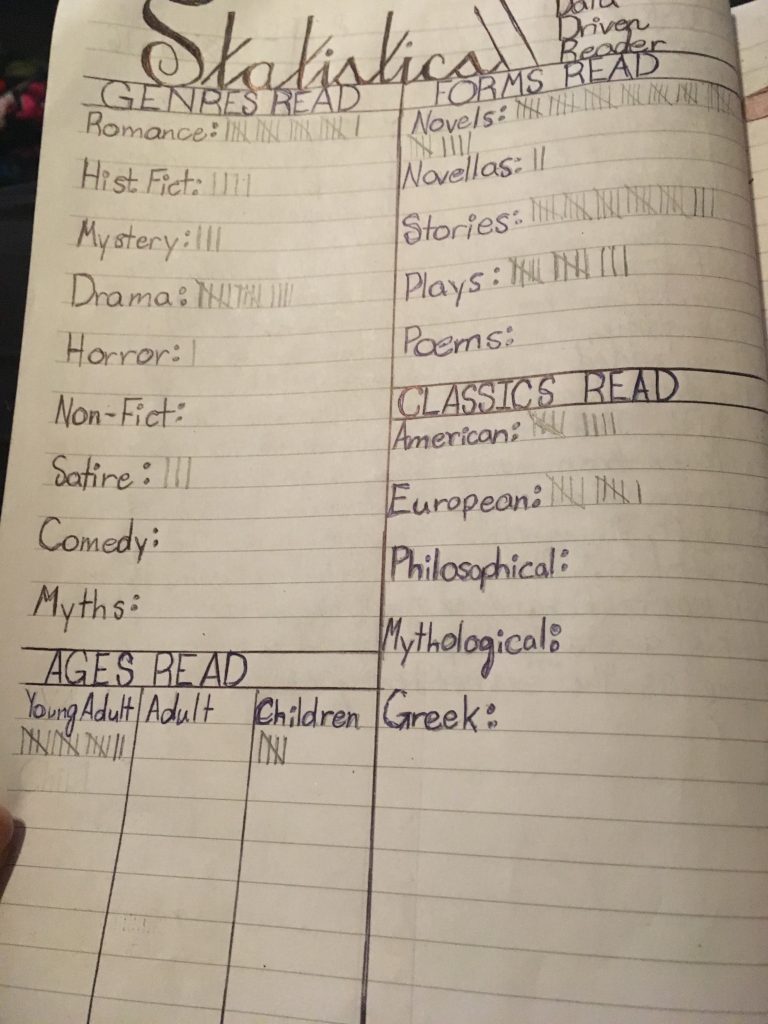
Reading Statistics make me feel like I’m trying something new.
With this, I track the types of stories I read, the forms of the stories, the author demographics and age-group demographics; really, whatever I feel is worth tracking to help me understand my reading patterns. This makes me reflect more as a reader because I have to think about what I like to read and explore what I haven’t read much of. I think it’s just a teacher thing, really–to track anything measurable. Ha!
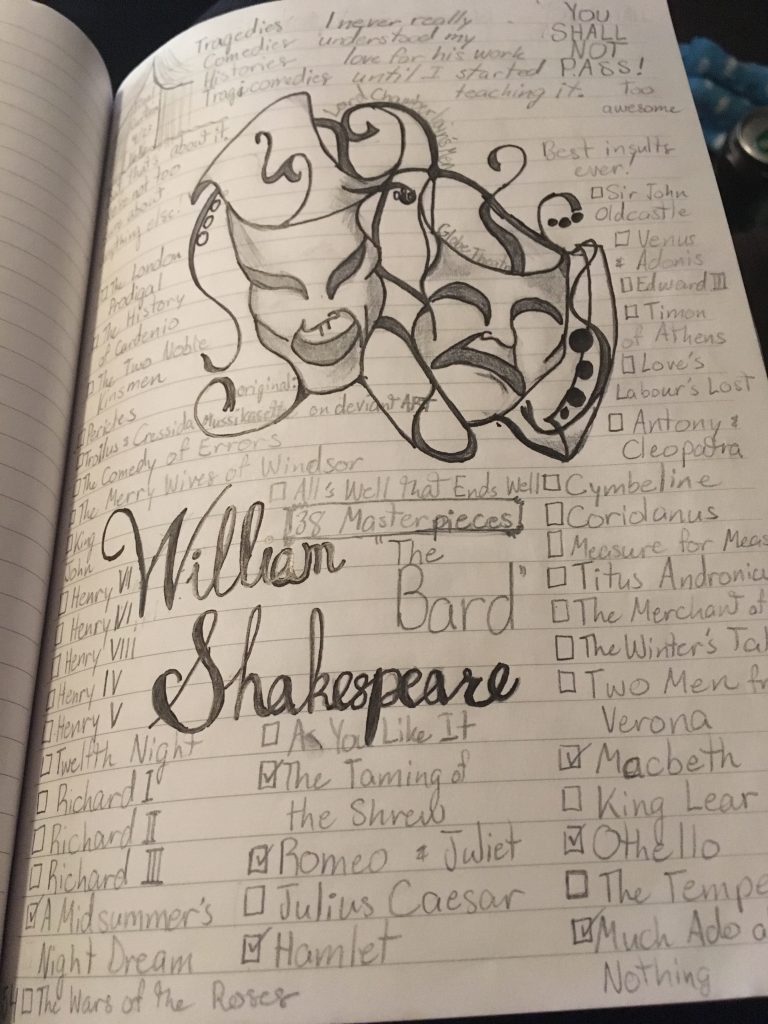
I would say my most favorite to do are my Infographics.
With these, I get to research and compile information about my readings, authors, and interests. I don’t know why, but bringing together more about my favorites as a reader really makes me think even more about the books, why I wanted to read it, the author’s purpose, how they’re written, and all other kinds of things.
I don’t find that many people do it in their reading journals. Really, I notice most people just have lots of trackers. But, I think having just inspirational things like these really help us stay motivated to read deeper into these topics.


There are lots of other things that I include, as well, including:
- Calendars to track my regular schedule
- Novel Series Trackers
- Title Lists of all the poems, novels, dramas, and others I have read
- Vocabulary words I loved from the books I read
- To-Be-Read (TBR) List of books I want to read each semester/season
- A Reader’s Shelf of some of my favorite stories
Unfortunately, I couldn’t upload the images, though.
Remember, reading is not restricted to books or print literature. I include podcasts, creepypastas, movies, and music in my work. All of those are stories that allow me to experience perspectives I otherwise wouldn’t. I actually engage with stories so much that I can dedicate an entire journal to just “reading”. Many people put everything in one journal–life, health, hobbies, spirituality. I prefer to keep them separate so I don’t neglect related topics because I’m running out of room.
If you are a creative writer, I really recommend you have a reading, poetry, and writing journal.


So, what do you think about reading journals? Do you have one; what do you put in it?
Give us some ideas below and on social media. Also, don’t forget to sign up for my bi-weekly Writer’s Wisdom newsletter for my ideas for your writing journal and tips about writing overall.

4 Comments
Hi, I just wanted to say that you have a real talent for drawing. Loved this post
I’m hoping part 2 of this post will be a 2018 Reading Challenge! Keep me honest and make me try new things! I’ve never done one before because 52 books in 52 weeks is so intimidating but I like your Reading Timeline that has a very do-able 1 a month approach. It would be an awesome page for the bullet journal I’ll be starting this coming year!
Yes, as adults, it’s so hard to find time to read unless we’re more reclusive! 1 a month is very doable for me and I’m quite a slow reader. If you’re a faster reader, you may even get through more! But, set that timeline goal relieves pressure.